
Getty Images
What next for sport’s relationship with Russia? 4th April: The word unprecedented has been exhausted over the past two years but there are few other ways to describe the international sporting community’s reaction to Russia’s ongoing invasion of Ukraine.
Even the International Olympic Committee (IOC), which just weeks before Russian president Vladimir Putin ordered his troops across the border in late February had desperately clung to its position of neutrality throughout China’s Winter Olympic Games, took an uncharacteristically heavy-handed stance in response to the attacks.
The IOC’s initial call for international federations (IFs) to relocate or cancel their planned events in Russia and Belarus was swiftly followed by a recommendation to bar athletes and officials from the two countries from participating. It would prove to be the catalyst for a chain of announcements as IFs moved to outline what sanctions they would be handing down, with some implementing stricter measures than others. As more and more punishments were issued, it was those not seen to be doing anything that were soon in the minority.
Russia, a country that for so long has viewed sport as a source of great national pride, had been cast out by the sporting community in just a matter of days. Read more.
31st July: England players celebrate with the Uefa Women’s Euro 2022 trophy after their victory in the final against Germany
Several bidding wars broke out in 2022 as a number of team owners were either forced or opted to put their prized assets on the market.
Some of the most notable transactions have seen English soccer club Chelsea sold to a consortium led by Los Angeles Dodgers co-owner Todd Boehly for UK£2.5 billion, an ownership group led by Walmart heir Rob Walton pay US$4.65 billion for the National Football League’s (NFL) Denver Broncos, and US private investment firm RedBird Capital Partners complete a €1.2 billion takeover of Italian champions AC Milan.
But now, as the year draws to a close, a growing list of globally recognised sports franchises across soccer, American football, baseball, basketball and ice hockey appear to be up for sale.
The owners of Liverpool and Manchester United have both made public their desire to sell. Phoenix Suns owner Robert Sarver put the National Basketball Association (NBA) franchise on the market in September following the league’s decision to suspend him for workplace misconduct. Dan Snyder is exploring a sale of the NFL’s Washington Commanders and there is also speculation that the Washington Nationals and Los Angeles Angels could be sold.
Throw in the Ottawa Senators and a handful of National Women’s Soccer League (NWSL) teams and there are plenty of franchises for prospective investors to choose from.
The big question heading into 2023 is who is going to buy who?
21st November: The collapse of the FTX exchange, which counts the likes of the Miami Heat, the Mercedes Formula One team and Major League Baseball (MLB) among its partners, will permanently alter the cryptocurrency sector’s relationship with the sports industry.
Coming in the wake of the so-called ‘crypto winter’, the demise of FTX potentially marks the end of a short but lucrative association between the world of sports and cryptocurrency firms.
The rush from rights holders to sign deals with brands in the cryptocurrency space once looked like it could fill the sponsorship hole being created by tighter regulation on the betting industry. With a lot of firms relatively new and yet to fully evolve their businesses, there appeared to be mutual benefits for both parties as brands brought in more attention than they could have got on their own.
Now, a senior executive at a major sports marketing firm has told SportsPro that cryptocurrency brands are not going anywhere, but there will be a lack of confidence from the sports industry in doing deals with them. Read more.
14th June: Technology giant Apple has made its first foray into live soccer broadcasting after striking a long-term global partnership with Major League Soccer (MLS) worth a reported US$250 million per year.
After moving for a package of Major League Baseball (MLB) matches earlier this year, Apple has made their biggest sports rights acquisition to date by signing a ten-year partnership with MLS to show all matches across the world via the Apple TV streaming platform.
The agreement, which kicks in next season and runs until the end of the 2032 campaign, will see every match offered through a new, MLS-dedicated subscription streaming service available exclusively through the Apple TV app.
A broad selection of MLS and Leagues Cup matches will also be available at no additional cost to Apple TV+ subscribers, with a limited number of games available for free. Access to the new MLS streaming service will also be included as part of full-season ticket packages. Read more.
Minal Modha, 23rd August: The UK has not seen the shake-up that has been happening in other European markets where the likes of DAZN and Amazon have been growing their sports portfolios. However, there are changes afoot. Discovery has entered into a joint venture with BT Sport, Amazon has acquired a Uefa Champions League rights package and Viaplay, the entertainment OTT platform from the Nordics, has launched a UK service. Then there’s always the possibility of DAZN launching. Read more.
11th March: The 2022 Major League Baseball (MLB) season is set to start on 7th April after the league finally reached a new collective bargaining agreement (CBA) with its players’ association (MLBPA).
The five-year deal brings to an end a 99-day lockout, the second-longest work stoppage in the league’s history, which had seen the two sides fail to settle on new terms after the previous CBA expired on 1st December.
The new agreement came a day after MLB further postponed the opening day of the 2022 season until 14th April. However, the CBA ensures that a full 162-game season will be played, while the four series that were previously removed from the calendar will be restored.
“I do want to start by apologising to our fans,” said MLB commissioner Rob Manfred. “I know that the last few months have been difficult. There’s a lot of uncertainty, at a point in time when there’s a lot of uncertainty in the world. [It’s] sort of the way the process of collective bargaining works sometimes, but I do apologise for it.” Read more.
Join The Club
Learn more July 2023#EASPORTSFC
More details: https://t.co/3fi6YPOH2G pic.twitter.com/75FLzjOapN
Shay Segev, chief executive, DAZN, 21st October: “Broadcasters have been doing the same things they’ve been doing for the past 20 to 30 years and not adapting quick enough. Sports fans now consume different apps for different experiences. But with this friction there is an opportunity to consolidate everything and make it more convenient.
“We are digitising sport. Most consumers are not consuming sport the same way they were 20 years ago. Within five or ten years, digital sports platforms will be how people consume their sport experiences.
“We are decoupling sport from the traditional broadcasters, similar to what happened in movies and general entertainment. You don’t watch a movie like you did ten years ago, when the film was on a certain channel at 10pm. Today you have the capability to open a Netflix-style app and watch sport live or on-demand on any device. Read more.” Read more.
28th April 2022: Digital soccer platform OneFootball has raised US$300 million in additional funding to drive its expansion into Web 3.0-based digital products such as non-fungible tokens (NFTs) for leagues, federations and players around the world.
The Series D round was led by blockchain fund Liberty City Ventures and also saw the involvement of Animoca Brands and Dapper Labs, all of which will become partners in a newly-created OneFootball Labs Web 3.0 joint-venture.
OneFootball believes its 100 million-strong user base coupled with the involvement of some of the leading players in the emerging sports Web 3.0 space mean it is well positioned to drive the mass adoption of blockchain-based experiences in soccer.
“We believe the future of football away from the stands and off the pitch will be decentralised and built on Web 3.0, giving back the ownership of data and digital assets to the fans,” said Lucas von Cranach, founder and chief executive of OneFootball. Read more.
This is a big deal, @USWNT. I’m proud of you for never giving up and I commend @ussoccer for agreeing to do the right thing.
Let’s keep up the fight until we close the gender pay gap in every industry. https://t.co/5ZTuHal4eb
The past 12 months have seen Formula One continue to cement its presence in the United States. The debut Miami Grand Prix attracted 2.6 million viewers on Disney-owned ABC, the series’ largest live audience in US TV history, while March brought confirmation that a race in Las Vegas will join the calendar from next season. Not to be outdone, the Circuit of The Americas staged the best attended US Grand Prix in history later in the season, with 440,000 fans coming through the gates at the venue in Austin.
With Formula One gaining so much traction stateside, it was no surprise to see ESPN agree to pay a reported US$90 million a year to retain the US TV rights when signing its contract extension in October, a huge increase on its previous deal worth US$5 million per year deal.
Elsewhere in motorsport, it was disheartening to see the contrasting fortunes for the pioneering all-female W Series, which was unable to complete its third season due to funding issues. The year started with so much promise when the series announced a three-year broadcast deal with Sky Sports, marking the series’ largest media investment to date, but ended three races short.
What the future holds for W Series remains to be seen, but Formula One has since announced plans to launch a pathway of its own for female drivers.
Stu Upson, chief executive, USA Pickleball, 25th March: “We don’t want to get into a situation like in tennis, where essentially you have seven entities running the sport around the world. You’ve got four Grand Slams, you’ve got the ITF, and then you’ve got the ATP and the WTA. And they don’t always necessarily play well together. We need to avoid that in pickleball.
“We are young and small enough at this point where if we keep conversations going, and not get into turf battles, and figure out how to grow the sport globally, and also what roles people can play, then we should be OK.
“But if people start saying, ‘I’m going to go do everything’, then we’re going to have challenges.” Read more.
11th October: British Cycling has faced criticism from environmental groups after announcing an eight-year partnership with energy company Shell UK.
The governing body said the deal, which begins this month and runs until the end of 2030, will accelerate its path towards net zero, but the announcement sparked a torrent of complaints from members on social media, with many saying they would cancel their subscriptions.
At a time when sustainability within cycling has become a huge talking point, British Cycling’s decision to partner with a major oil and gas producer, whose record on environmental issues has been repeatedly criticised, was labelled ‘greenwashing’. Read more.
𝗪𝗮𝘁𝗰𝗵 . 𝗦𝘁𝗿𝗲𝗮𝗺 . 𝗙𝗿𝗲𝗲
Introducing #FIFAPlus: your new home for football ✨
Watch or stream for free thousands of live matches per month, stories from your favourite footballers, and the biggest archive of World Cup matches 👉 https://t.co/EO11dasOum pic.twitter.com/h4vm0z3PqJ
After Wasps and Worcester’s woes, what needs to change in Premiership Rugby? 8th November: Wasps players were reportedly “bawling their eyes out” at the news, a reaction likely repeated by hundreds of newly unemployed staff fully aware of the cost of living crisis and rising inflation.
The emotional consequences are one thing. But the plight of Wasps and Worcester has also exposed some harsh truths for English rugby. Clubs have been allowed to operate with minimal accountability for too long and the subsequent fallout has cast doubt over the commercial viability of the domestic game.
There may be hope yet for Wasps and Worcester. At the time of writing, both had drawn interest from prospective new owners. But even if they do return to the top table, it is clear a major overhaul is needed in order for on-pitch ambition and off-field prosperity to coexist. Read more.
Connected fitness and home entertainment were two of the big winners of the pandemic, but 2022 was a challenge for subscription-based services as the rising cost of living compounded a post-lockdown correction.
Peloton and Zwift thrived amid gym closures and social distancing measures but have cut jobs, increased prices, and restructured, while streaming services have also felt the pinch. Netflix has laid off some of its workforce and embraced advertising, DAZN has increased its fees to reflect rising rights costs, and others have created ‘super bundles’ of sport and entertainment to combat churn.
The challenge for these tech and media darlings is to plot a path to profitability at a time of potential subscription fatigue.
The tennis world has been bracing for the looming departure of its golden generation for years, fully aware that their retirement would leave a gaping hole at the heart of the sport. So when the time came to finally say goodbye to two of its undisputed GOATs, there was an unmistakable sense of an era ending.
Serena Williams’ announcement that she would be “evolving away from tennis” after the US Open to focus on growing both her family and Serena Ventures, her increasingly active investment firm, had been coming for some time. Yet its impact was nevertheless immeasurable. The American icon’s final game at her home Grand Slam delivered ESPN’s most-watched tennis broadcast on record, while an outpouring of goodwill also cemented her status as the most tweeted-about female athlete of all time.
Similarly, in the men’s game, ripples were felt far and wide upon the departure of Swiss great Roger Federer. His decision to bow out from the ATP Tour at September’s Laver Cup, a tournament conceived in his own image, provided a fitting, tearful send-off and inevitably sent the price of tickets to his final competitive appearance – playing alongside Rafael Nadal, no less – into the stratosphere.
The job of filling such sizeable shoes won’t be easy. Plans to bring the many corners of tennis closer together and bolster the global platform upon which its top proponents can shine have gathered pace, however, with a Netflix docuseries, a unified mobile app and a combined national team tournament all signs that 2022 marked the beginning of a new chapter for the sport.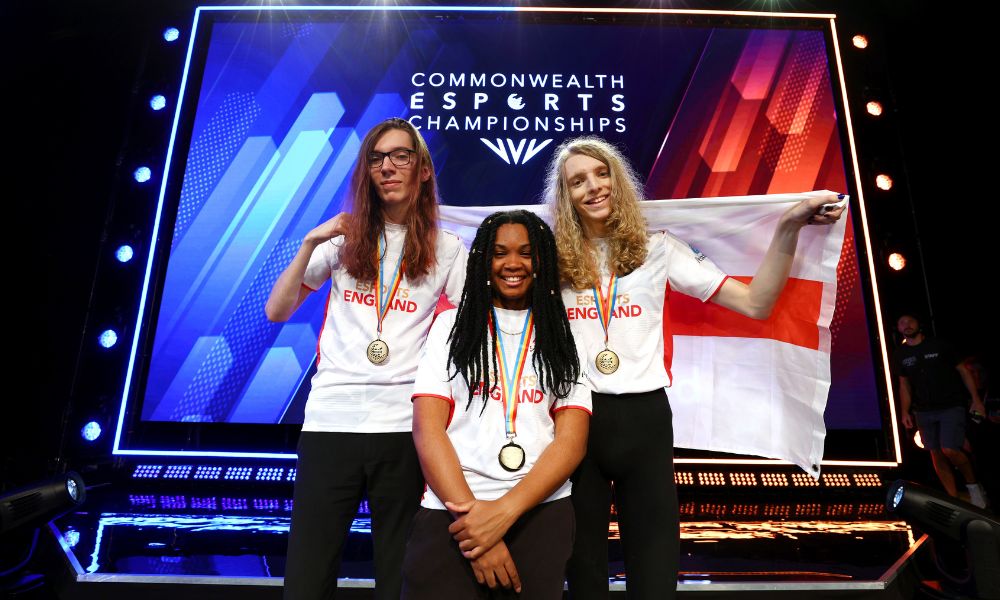
Members of Team England pose after winning the Rocket League gold medal match during the inaugural Commonwealth Esports Championships at Birmingham 2022
22nd July: Barcelona have confirmed a €300 million agreement with US investment firm Sixth Street to sell an additional 15 per cent of their domestic TV rights revenue over the next 25 years.
Earlier this month, Barcelona secured a €207.5 million investment from Sixth Street in return for ten per cent of the team’s LaLiga TV rights income for the same period. In total, Sixth Street will now receive 25 per cent of the club’s LaLiga TV rights revenue for the next 25 years.
The Catalan club have been forced into finding alternative funding methods, after suffering severe financial losses during the pandemic. Read more.
Enjoying SportsPro content? Create your MySportsPro account and get enhanced access.
Have an account? Log in
A link has been emailed to you – check your inbox.
Already registered?
Don’t have an account?