Introduction
Market Scale and Opportunity
Achieving Social Commerce Success with Authentic, Interactive and Engaging Content: Coresight Research x LiSA Analysis
1. UGC Can Boost Customer Engagement
2. Reality Technologies Improve Immersiveness
3. Shoppable Video Ads Bridge the Gap Between Discovery and Purchase
4. Livestreaming E-Commerce Is Gaining Traction
Company and Solution Overview: LiSA
Competitive Advantage
Case Studies
What We Think
Implications for Brands/Retailers
Implications for Technology Vendors
Social commerce is emerging in the West as a powerful channel for brands and retailers to offer customers a highly inspirational, interactive and frictionless shopping experience.
We explore four key trends in the social commerce industry—namely, the rise of user-generated content (UGC), the extensive use of augmented and virtual reality (AR/VR) to grow higher engagement, the increase in the popularity of shoppable videos and the spread of livestream shopping in the US.
This free report is sponsored by LiSA, which offers software-as-a-service solutions to enable live shopping experiences on e-commerce sites. We outline the company’s offerings and competitive advantages in this report.
This report forms part of our Innovator Intelligence series, which focuses on emerging companies that are disrupting traditional retail and fueling innovation across the retail value chain.
Data in this report include:
Companies mentioned in this report include: AIMIRR, Amazon Fashion, Avon, Balodana, eBay, Marks & Spencer (M&S), Nordstrom, Olaplex, Snap, Walmart, Wayfair
Other relevant research:
Market Scale and Opportunity
Coresight Research Analysis
What We Think
Social commerce is experiencing promising growth in the US and is likely to become one of the most popular marketing and sales channels among brands and retailers. Furthermore, as shoppable and live-video content integrations speak to increasing consumer demand for seamless online shopping experiences, we expect more retail companies to enter the livestreaming e-commerce space. Retail companies can work with tech providers to maximize the sales-generating potential of livestreams on both owned or third-party sites, providing a seamless shopping journey that boosts engagement, loyalty and conversion.
Social commerce is emerging in the West as a powerful channel for brands and retailers to offer customers a highly inspirational, interactive and frictionless shopping experience.
Social commerce can include any online experience in which social interaction is paired with a seamless path-to-purchase. Examples include shopping through social media platforms, in-game shopping and livestream shopping. The social commerce ecosystem comprises three layers:
In this Innovator Intelligence report, we discuss key opportunities in the US social commerce market, covering UGC, advanced technologies and livestreaming.
This report is sponsored by LiSA, which offers software-as-a-service (SaaS) solutions (ranging from no-code to enterprise to headless) to enable live and social shopping experiences on e-commerce retailers’ and media platforms’ websites. We outline the company’s offerings and competitive advantages in this report.
According to the Coresight Research US Social Commerce Survey 2022, conducted online in March 2022, 90% of US consumers use social media and 65% use social media as part of the shopping process—for discovering, researching or purchasing products. Comparing this to our survey findings two years prior, we can see that consumers are increasingly using social media for shopping: in March 2020 (effectively pre-pandemic), the adoption rate was 8.0 percentage points lower, at 48%.
Livestreaming is a key component of the social commerce market, and it is growing rapidly in the West (following the success and continued growth of the established market in China). We estimate that the US livestreaming e-commerce market will grow at a CAGR of around 36% from $20 billion in 2022 to $68 billion in 2026, when livestreaming sales will account for over 5% of total online sales in the US.
In addition to livestreaming, we expect the growth of the US social commerce market to be driven by rising consumer demand for UGC and extensive use of advanced immersive technologies. We will see more brands and retailers turn to the channel to tap opportunities to expand their digital footprint and offer interactive shopping experiences, gaining a competitive edge in the increasingly crowded online space.
Sophie Frères, Co-Founder and CEO of LiSA, told Coresight Research that the Western e-commerce market is beginning to enter the maturity phase when it comes to embracing live and social commerce, but it is highly fragmented. LiSA anticipates e-commerce retailers shifting to a “community-led, UGC and thus ‘always on’ approach” to livestream shopping in the short term. This would translate to better organic growth along with lower customer acquisition costs versus traditional marketing. In the long run, the company envisages a social commerce ecosystem in which all players work together to offer consumers a seamless discovery and purchase experience.
In Figure 1, we present four opportunities that brands and retailers can tap to achieve success in the US social commerce space. We explore each in detail below.
Figure 1. Four Key Opportunities in US Social Commerce 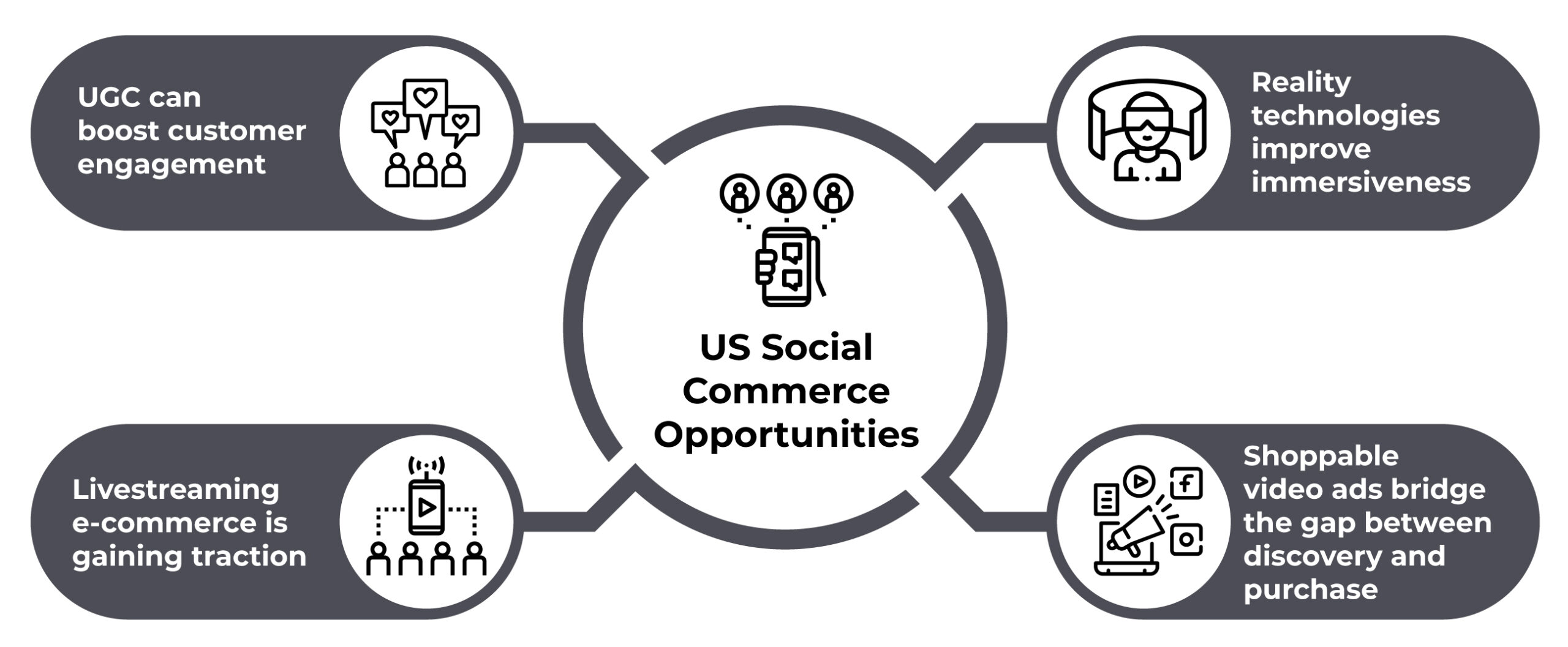
UGC is any form of content—images, videos, reviews, testimonials or even podcasts—that is created and shared by consumers on online platforms. One notable form of UGC that is relevant to retail is product recommendations and reviews, which shoppers often rely on to influence their purchase decisions. UGC is effective because it is built on trust between peers.
In our US Social Commerce Survey 2022, positive reviews ranked the second most cited reason for shopping on social media platforms, cited by 54% of consumers who use social media as part of the shopping process (behind “great deals,” which was cited by 56%), reflecting consumer demand for community engagement.
Additionally, 61% of marketers have plans to incorporate more UGC into their marketing strategy, according to a survey of 500 global consumers and marketers conducted by US-based UGC platform Tintup in January 2022.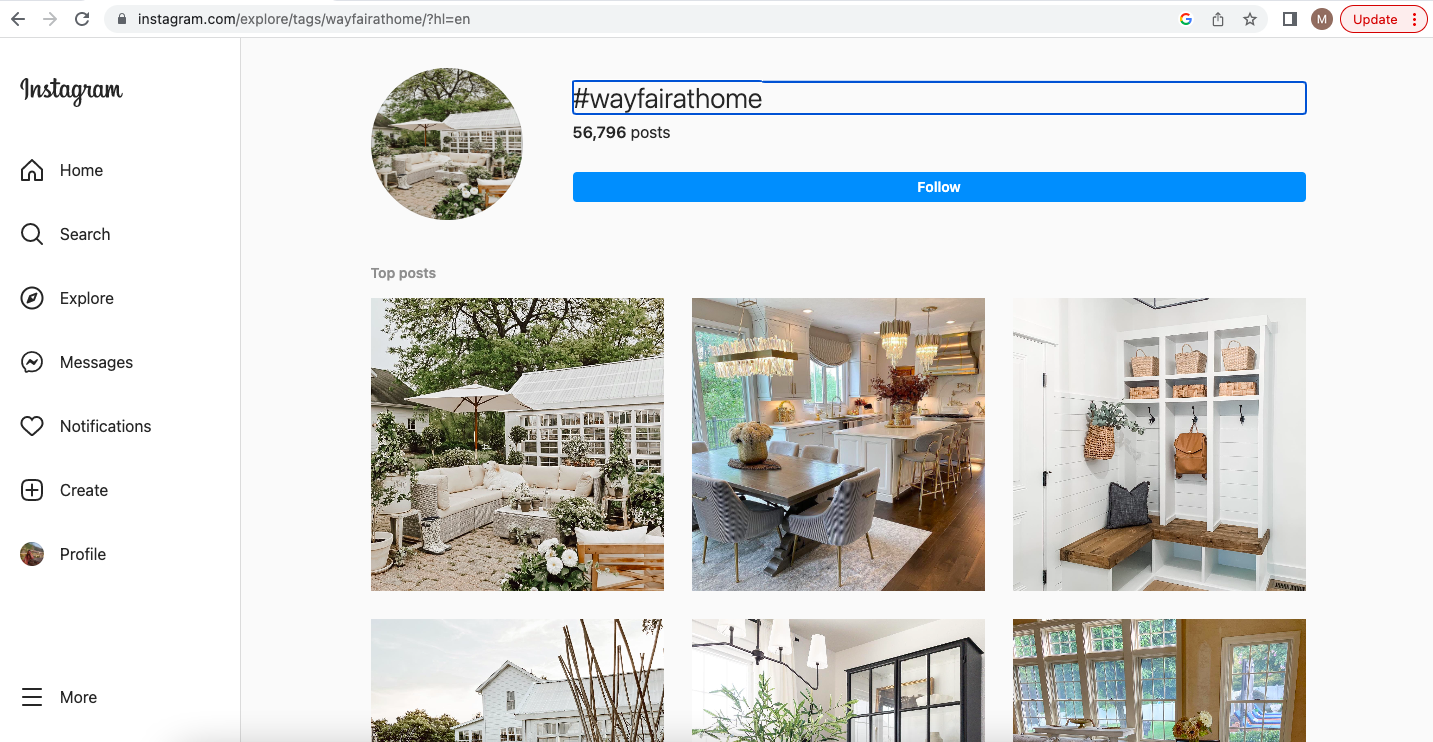
Below, we highlight three key benefits of using UGC for marketing purposes.
Authenticity and relatable content are powerful drivers of engagement on social networks. Our US Social Commerce Survey found that 30% of social media shoppers who follow influencers/celebrities on social media follow real customers, reflecting an appetite for UGC that brands can capitalize on to build trust and credibility among shoppers.
UGC allows consumers to become a part of a brand’s growth by integrating them into an engaged brand community. Consumers that create and interact with UGC become brand advocates and can influence the shopping decisions of other people with similar likes and dislikes with their content. Through engaged users, brands are able to build relatable narratives across social media, improve authenticity and better target potential customers.
UGC is an inexpensive and time-efficient form of advertising, which can be particularly beneficial for small businesses. Unlike influencer marketing, brands do not have to pay anything to the creator or hire an agency to run and manage these campaigns.
Consumers are open to using reality technologies in the shopping journey: 84% of AR users or future users in the US are interested (somewhat or very) in using augmented reality (AR) to interact with a product before buying, according to the 2022 Ipsos Augmentality Shift Study, (a global consumer survey conducted by market research firm Ipsos and Snap, parent company of social media platform Snapchat, in April 2022).
AR and virtual reality (VR) enable brands and retailers to offer entertaining experiences that attract and engage customers—tapping the benefits of shopping both online (such as convenience) and in-store (trying on products). Virtual try-on helps customers gain confidence in their purchase decisions, increasing conversion and reducing product returns for brands: four in five (81%) US shoppers feel more confident in their purchase a result of using AR, according to the 2022 Alter Agents study commissioned by Snap and Publicis Media.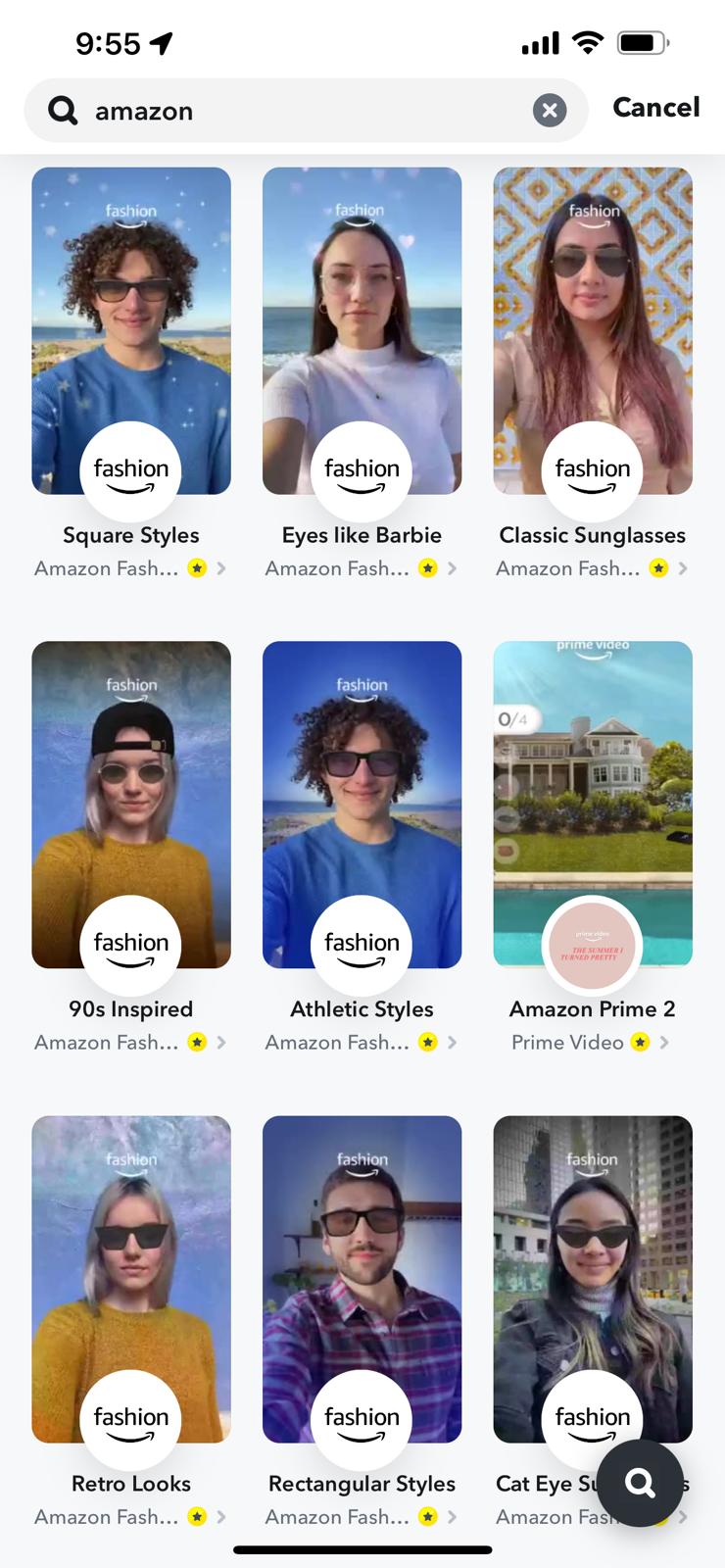
Shoppable video ads allow shoppers to purchase products directly via embedded links within the video. This helps businesses bridge the gap between discovery and purchase by enabling instant conversion rather than requiring shoppers to search for featured products on different e-commerce sites (which would be an inconvenience that may prompt them to abandon the purchase).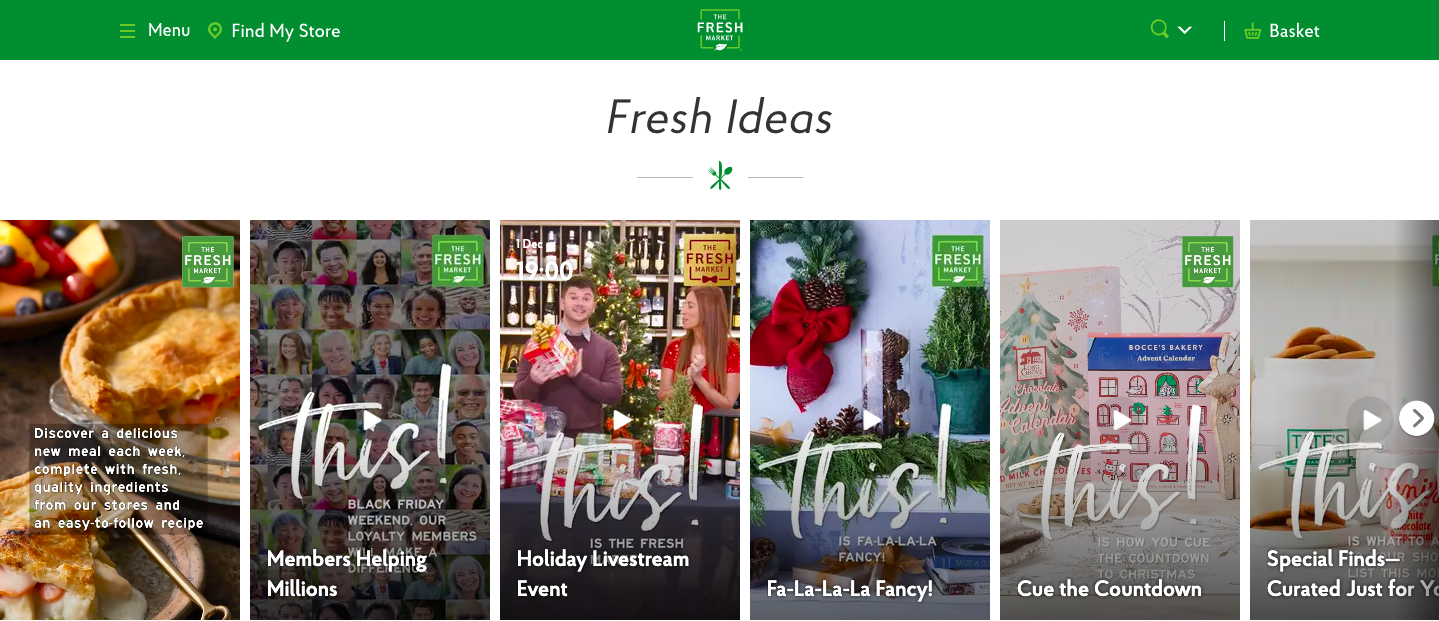
Social media platforms, including Pinterest and YouTube, have already integrated tools for shoppable video advertising. There is rising interest among brands and investors in shoppable video advertising, with some already using the format to simplify the checkout process and boost conversion (including US supermarket chain The Fresh Market, pictured above).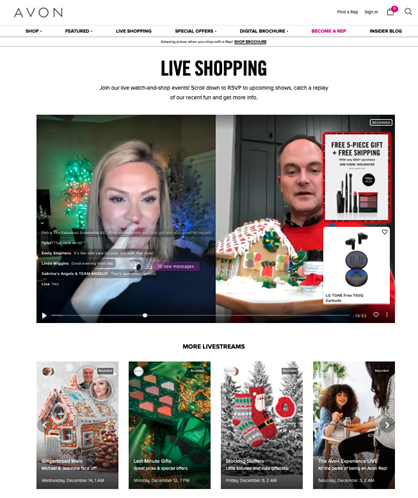
As we discussed earlier, we see livestreaming e-commerce as having promising growth potential in the West over the next few years. Livestreaming allows for a new level of interaction between a brand and shoppers during the path to purchase. Hosts (content creators, store associates or influencers) demonstrate products live, and viewers can make comments or ask questions using chat functionality, providing a touchpoint for brands to connect with customers, influence purchase decisions and improve conversion.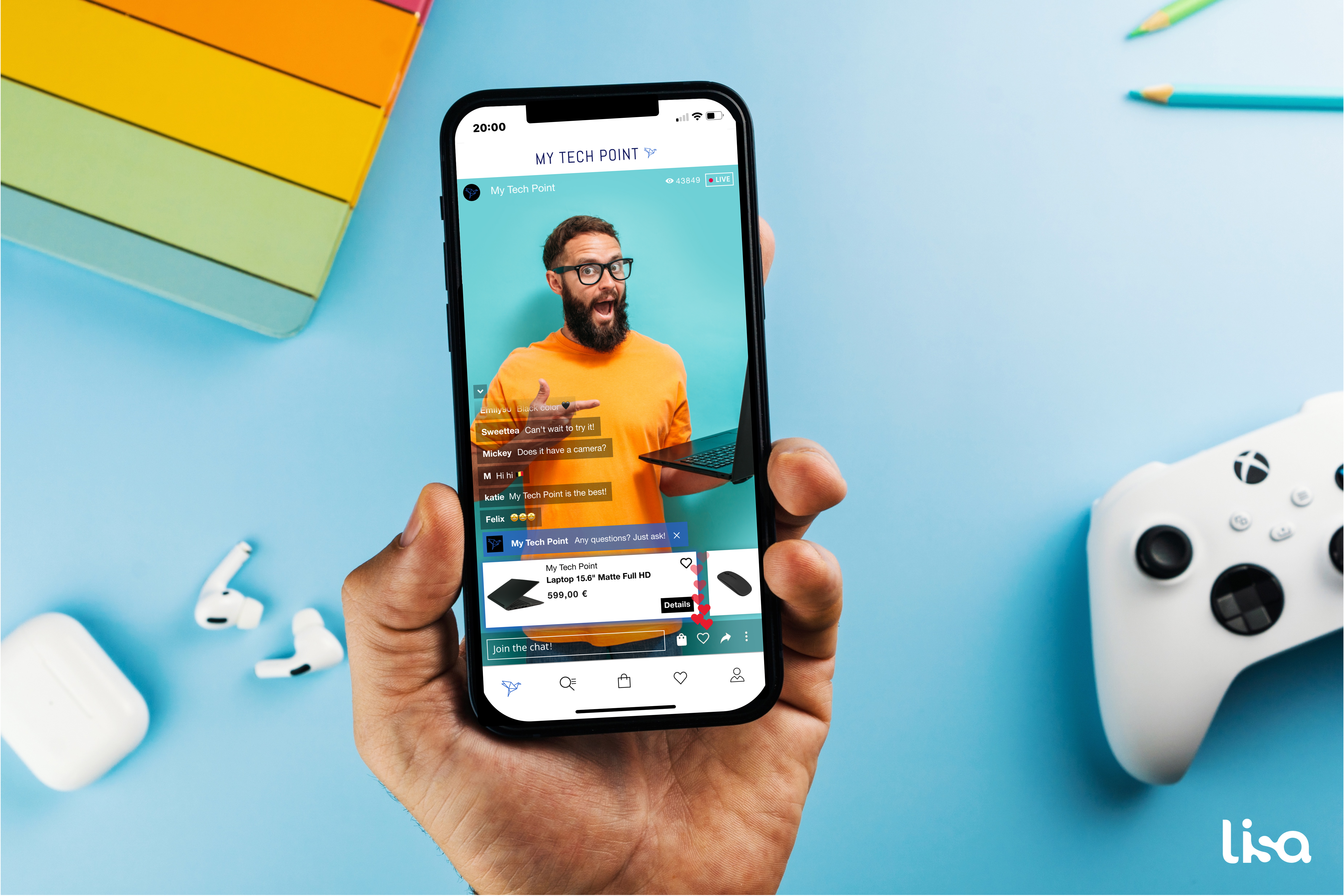
The Coresight Research US Livestreaming Tracker found that adoption of livestreaming in the shopping process among US consumers has increased since the start of the year: the September 2022 survey showed that 54% of respondents have watched a shoppable livestream—up from 32% in February 2022. Furthermore, two in five (39%) respondents reported in September that they had bought products through shoppable livestreams in the past three months. We also tracked a high frequency of engagement in livestreaming, with 89% of livestream viewers reporting that they watched shoppable livestreams at least once a month in the past three months (whether live or on demand)—and half reported watching at least a few times a week (see Figure 2).
Figure 2. Frequency of Watching Shoppable Livestreams (% of Respondents)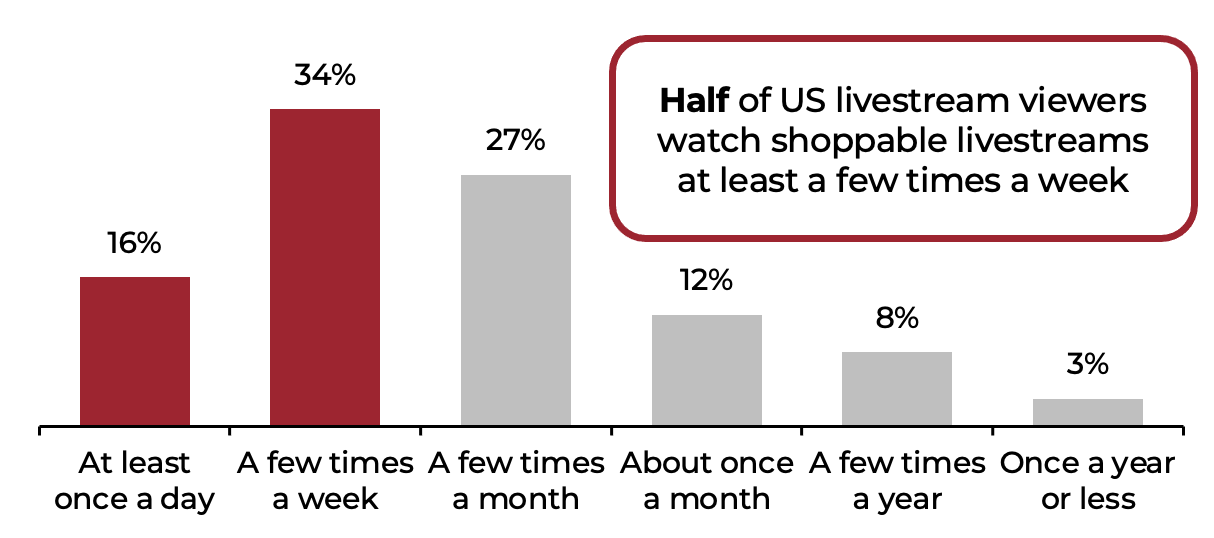
There are two ways in which retailers and brands are offering livestream shopping experiences to their customers, which we discuss below.
Brands and retailers can host livestreaming events on third-party platforms such as social media apps (Instagram, Pinterest, Snapchat) and online marketplaces (Amazon, eBay, Etsy).
Twitter launched an e-commerce initiative in November 2021 that included a livestream shopping option for retailers and brands. Since the Live Shopping platform launch, Twitter has partnered with various brands and retailers, including Samsung and Walmart, for livestreaming. Walmart was the first retailer to test Twitter’s livestream shopping platform with a session that saw musician and creator Jason Derulo review various products; users were able to shop the featured products through Walmart’s Twitter page.
eBay announced the launch of its livestreaming shopping platform, eBay Live, in June 2022. The platform focuses on selling trading cards and collectibles and driving engagement among the collector community. The first livestream session (held in June 2022) offered rare trading cards from eBay seller Bleecker Trading and was hosted by trading-card enthusiast DJ Skee.
Technology providers help brands and retailers to integrate livestream shopping features into their own e-commerce sites.
US-based department store chain Nordstrom launched a shoppable, interactive livestream shopping platform in partnership with LiSA in March 2021. The livestream channel streams various shopping and styling events, including live beauty tutorials, and programs featuring designers such as Charlotte Tilbury and Anastasia Soare.
Headquartered in Germany with teams spread internationally, LiSA offers software-as-a-service (SaaS) solutions for e-commerce retailers and media platforms to bring social commerce experiences to their online audiences. These solutions range from no-code to enterprise to headless depending on the use case that a brand desires to enable. The company’s clients include global brands such as Avon USA, L’Oréal and Marks & Spencer (M&S).
LiSA’s solutions enable brands and retailers to create proprietary live shopping experiences through a customized and, if desired, headless content management system (CMS), allowing them to push hosted content simultaneously to social media platforms such as Instagram and TikTok.
LiSA offers three live shopping solutions—LiSA POP, LiSA DAZZLE and LiSA SHINE (see Figure 3)—as well as Shoppable Videos, a white-label SaaS solution that allows retailers to use LiSA’s video-editing tools and embed shoppable videos on their websites (including past livestream events). It has also recently launched a white-label solution called Shoppable Short Stories (think social media comes to e-commerce), embeddable anywhere on a brand’s website, through which a brand can invite its community to become direct on-site content creators.
Figure 3. LiSA’s Live Shopping Solutions for Brands and Retailers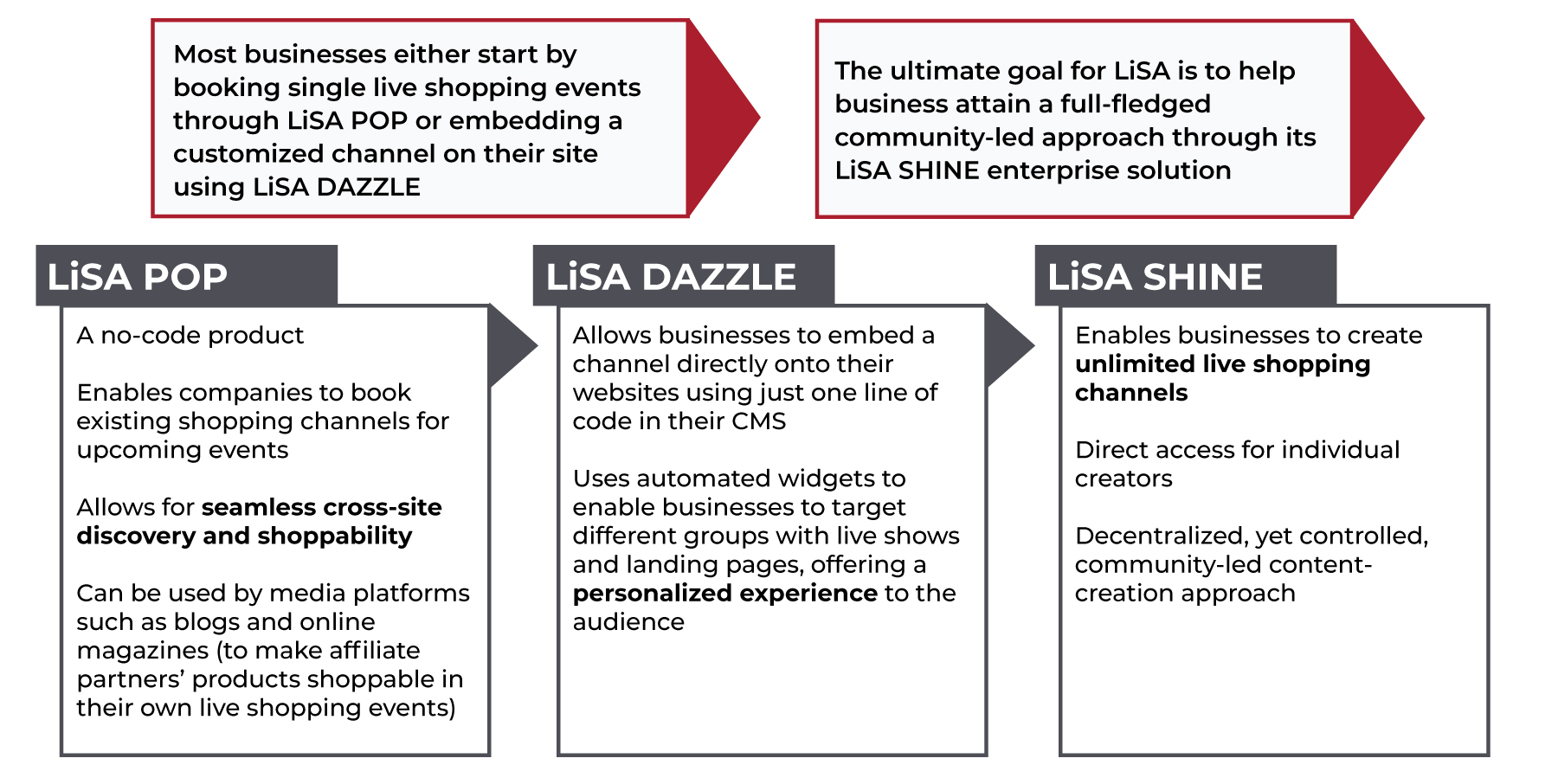
The company also offers back-end SDKs (software development kits) for large e-commerce retailers and marketplaces that want to develop their own front-end experience through a browser or app, while leveraging LiSA’s suite of headless back-end services. This capability makes LiSA a leading enterprise-ready live-commerce solution provider globally.
Most recently, in August 2022, LiSA secured funding of €2.7 million ($2.8 million) during a seed round led by TechVision Fonds and joined by Venrex and angel investor Georgie Smallwood (part of Accel’s Scout program and Chief Product Officer at micro-mobility startup Tier).
LiSA’s competitive advantage lies in the flexibility of its products to cover a broad range of application use cases, from no-code live shopping solution (LiSA POP) to a full-fledged community-led enterprise livestreaming tool (LiSA SHINE). Its enterprise live shopping solution can easily be scaled out among its clients’ communities and livestreaming partners, enabling rapid and organic channel growth.
The company focuses on designing social commerce products that allow brands, retailers and media platforms to manage content from multiple creators in a decentralized manner simultaneously. According to LiSA, its clients have achieved increased conversion rates (of up to 37%), social sharing rates of up to 43% and engagement of up to 91% using its solutions.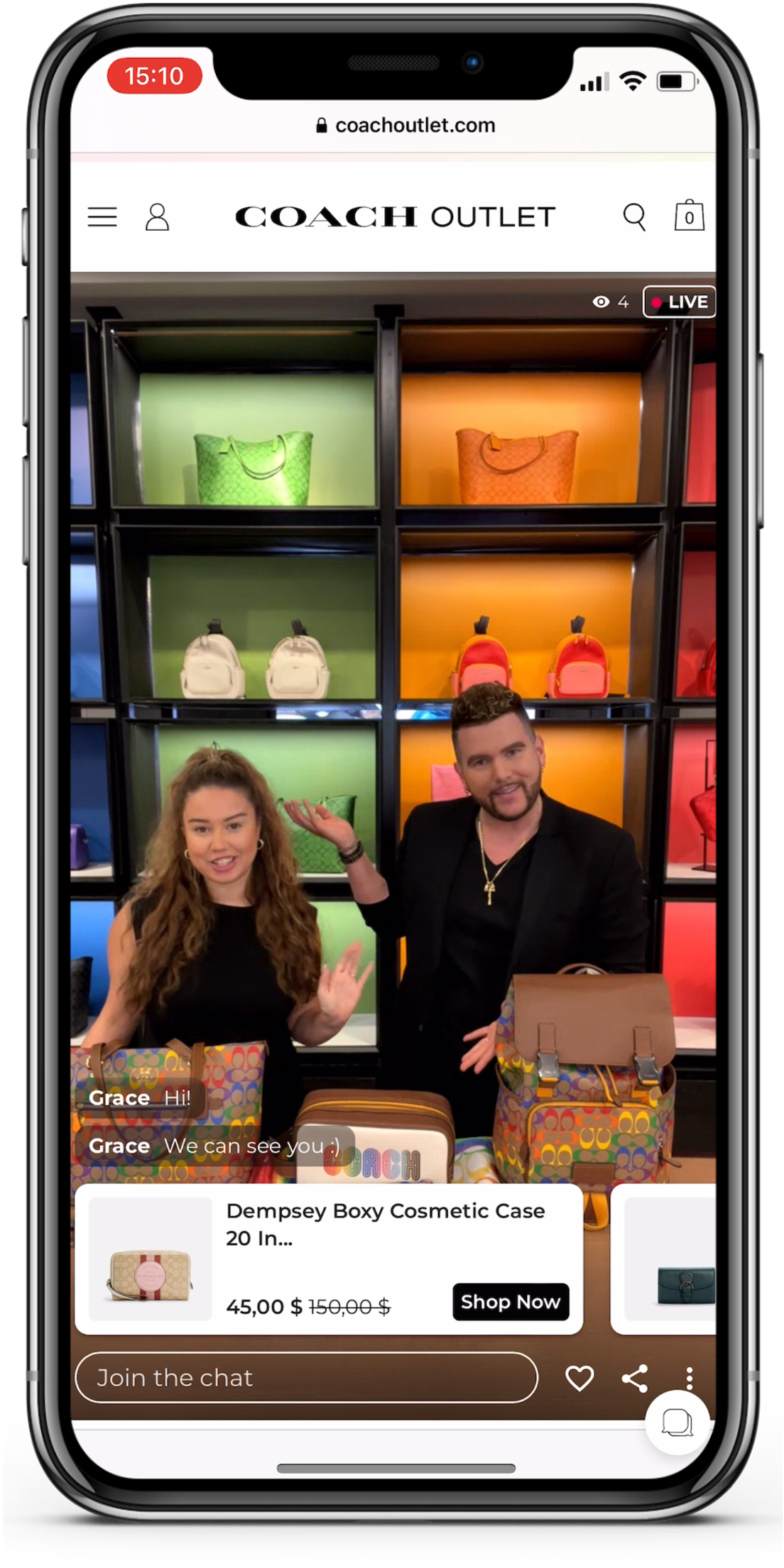
Global beauty brand Avon USA partnered with LiSA in 2020, using LiSA POP to set up its first livestream shopping event, with real-time audience interaction and a frictionless path to purchase. In total, 17,000 brand representatives attended the event online. Avon witnessed 90% engagement on its website, with total sales reaching $1.3 million.
Avon now hosts regular shopping events on its website using LiSA DAZZLE. The company utilizes a community-led strategy to offer customers fresh, exciting and authentic services. The new strategy has helped Avon generate 90% audience chat engagement and social sharing rates of up to 43% (meaning that up to 43% of people in a live show will invite a friend to join).
M&S, a British retailer of food, clothing and homeware, first partnered with LiSA in 2021 to power a few live shopping events for members of its loyalty program.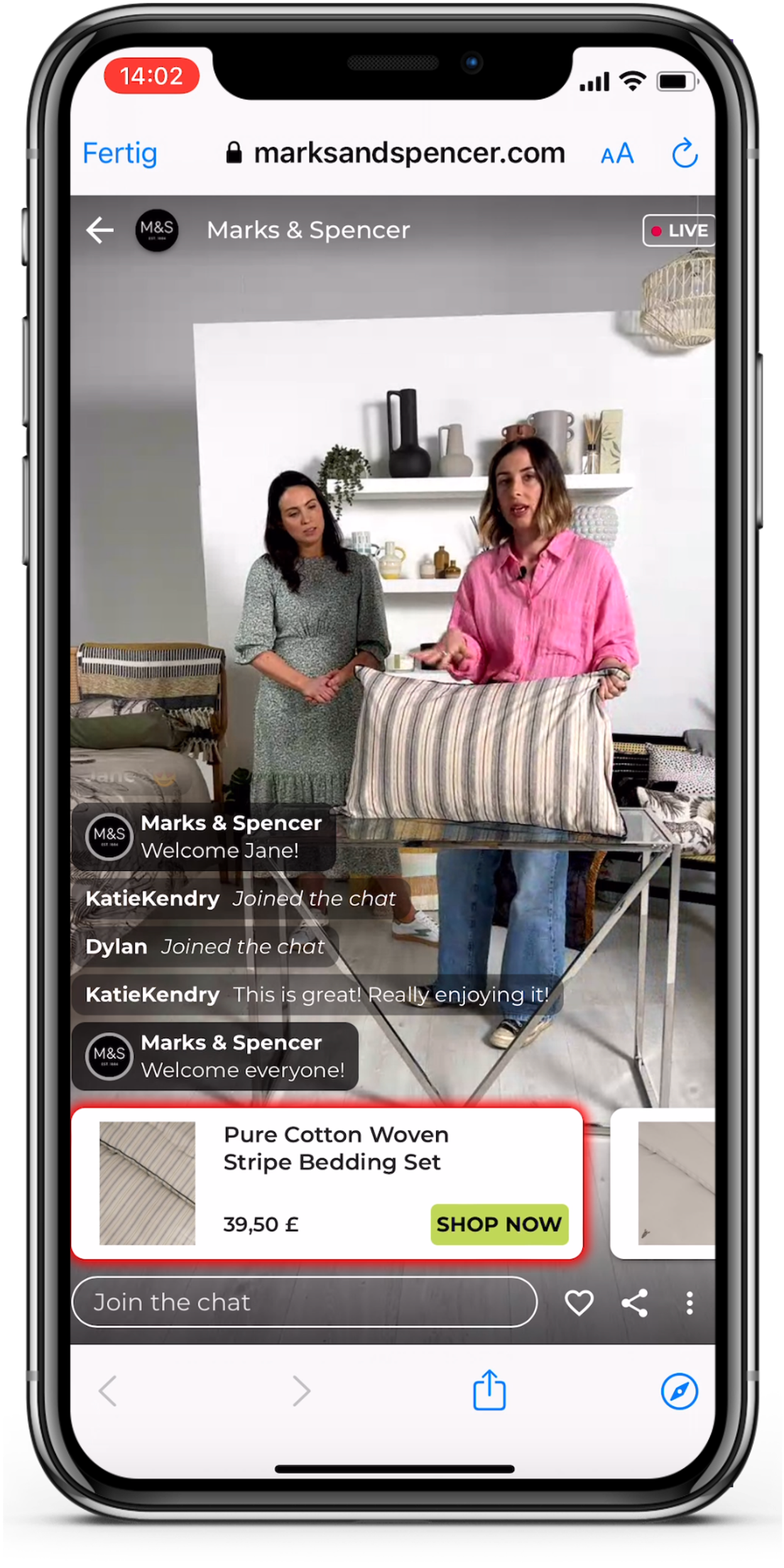
The retailer has continued to work with LiSA in 2021 and 2022 to launch multiple weekly interactive and shoppable livestreams that enable customers to discover new products and pose live questions to an M&S expert.
On the partnership, LiSA stated:
What made M&S stand out very early was its willingness to embrace its own community of experts for content. The vast majority of its live shopping shows are hosted by in-house buyers, stylists or in-store colleagues. This community-generated content is a big hit with customers, as evidenced by above-industry-average viewing times of 40% (i.e., on average, audiences stay to watch 40% of a total live show). This community-led approach also offers M&S the advantage that the content is quick and easy to produce; it is therefore faster to scale its activities.
Social commerce is experiencing promising growth in the US and is likely to become one of the most popular marketing and sales channels among brands and retailers. Furthermore, as shoppable and live video content integrations speak to increasing consumer demand for seamless online shopping experiences, we expect more retail companies to enter the livestreaming e-commerce space.
About Coresight Research Innovator Intelligence
Coresight Research Innovator Intelligence reports are produced in partnership with leading firms in the retail, technology and startup ecosystems. These reports present expert analysis and proprietary data on key topics in the retail, technology and related industries, and enable partner companies to communicate their brand and messaging to a wider audience within the context of brand-relevant research.
This document was generated for
Introduction
Market Scale and Opportunity
Achieving Social Commerce Success with Authentic, Interactive and Engaging Content: Coresight Research x LiSA Analysis
1. UGC Can Boost Customer Engagement
2. Reality Technologies Improve Immersiveness
3. Shoppable Video Ads Bridge the Gap Between Discovery and Purchase
4. Livestreaming E-Commerce Is Gaining Traction
Company and Solution Overview: LiSA
Competitive Advantage
Case Studies
What We Think
Implications for Brands/Retailers
Implications for Technology Vendors
Learn more about Coresight Research Subscription Membership tiers and benefits, including access to: Insight Reports, Deep Dives, Store Closure Reports and Sector Overviews.
Learn more about Innovator Intelligence, a platform that curates, showcases and connects the world’s most innovative technology companies with partners, investors and mentors.
Register for a free user account to leave comments and access more research– including Company Earnings, Company Profiles and Presentations.
Register for a free user account to access select reports
and infographics as well as Weinswig’s Weekly.
Click here to register.
Deborah Weinswig, CPA, CEO and Founder, Coresight Research, deborahweinswig@coresight.com
New York • Hong Kong • Lagos • London • Mangaluru (India) • Shanghai
Copyright © 2023 by CORESIGHT RESEARCH. All Rights Reserved
Copyright © 2023 by CORESIGHT RESEARCH. All Rights Reserved
